
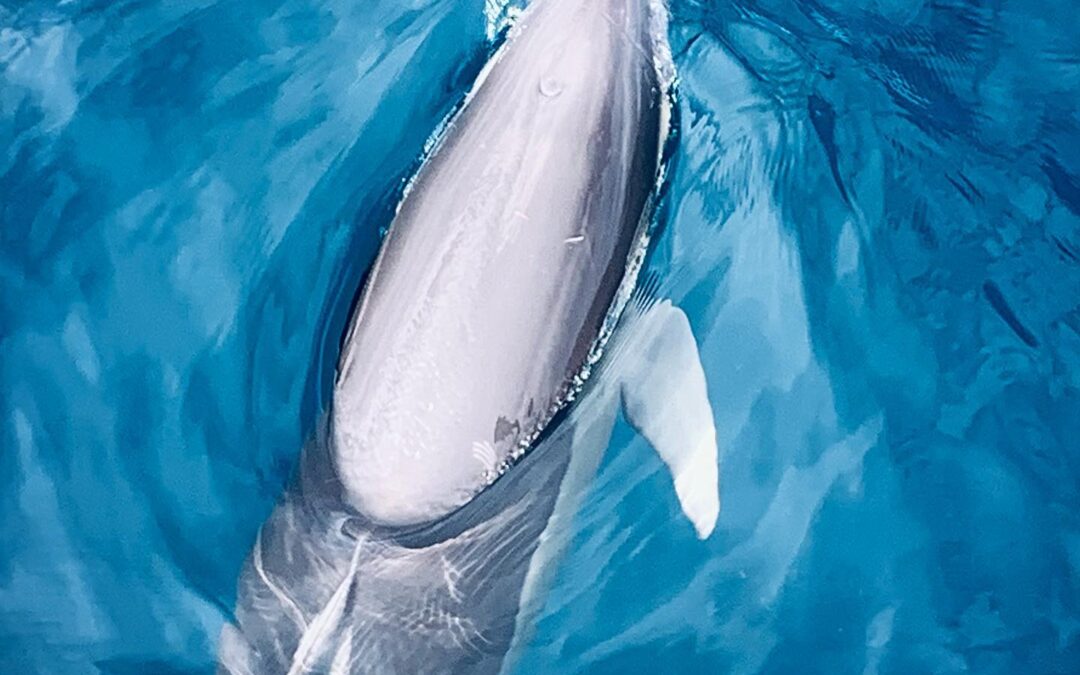
Many visitors to the Bay of Plenty ask, “Is it safe to swim with dolphins?” The honest answer is that swimming with dolphins, whether in captivity or in the wild, can be risky for people and harmful for the dolphins themselves.
The good news is that a dolphin tour in Tauranga offers a better way to experience these incredible creatures up close, without requiring you to get in the water at all.
Because we see so many baby dolphins in Tauranga during the summer seasons, the likelihood of encountering a pod without calves is extremely low. For this reason, we focus on responsible, ethical marine wildlife tours rather than swimming experiences. Our priority is always the protection of marine life and providing a safe, sustainable wildlife experience for our guests.
The Risks for Humans
Dolphins might look friendly and happy, but they are powerful, unpredictable wild animals, not domesticated pets.
Is it dangerous to swim with dolphins? The evidence suggests it can be. Swim-with-dolphin programmes worldwide have reported injuries, including bites, lacerations, bruises, and even broken bones. Dolphins use their powerful tails and hard rostrums (beaks) to communicate, and what feels like playful nudging to them can cause serious harm to humans.
Even seemingly curious behaviour can be misinterpreted. A dolphin investigating a swimmer isn’t necessarily welcoming them; it’s assessing a foreign object in its environment. When dolphins feel crowded or stressed, they can become defensive. Close contact also brings a risk of disease transmission in both directions, as humans and dolphins can share certain bacteria and other pathogens.
Is Swimming with Dolphins Ethical?
From an animal-welfare perspective, many marine mammal scientists and conservation groups increasingly say that it is bad to swim with dolphins from the animals’ perspective. They point to growing evidence that frequent human contact can disturb natural behaviours and increase stress.
Wild dolphins commonly travel large distances in a single day. They hunt at night and rest during the day, often in shallow coastal waters. When swimmers enter these areas, they interrupt critical rest periods that dolphins need to survive. Field studies in places such as Hawaii have associated intensive swim tourism with disrupted rest, changes in habitat use, and, in some cases, dolphins abandoning key areas.
Mother dolphins with calves are particularly vulnerable. The stress of swimmers approaching can separate mothers from their young or force calves to expend energy keeping up with a fleeing pod. This is one of the key reasons swimming with dolphins is strictly regulated in New Zealand – the Department of Conservation does not permit swimming with pods that include calves.
In New Zealand, all whales and dolphins are protected by law, and regulations strictly control how people can interact with them at sea. There are rules governing the proximity of boats to marine mammals, the speed at which boats can travel near them, and when people are permitted (or not permitted) to enter the water around them.
The most ethical dolphin encounter is one where the animals remain in control – where they can approach, interact, or leave entirely on their own terms.
A Safer Way to See Dolphins Near Tauranga
So, is it safe to swim with dolphins in the wild? A more helpful question might be: why swim when you can watch dolphins behaving naturally from the comfort of a spacious vessel?
Boat-based wildlife cruises offer everything a swim encounter promises, while following approach rules designed to keep both people and animals safe. Dolphins are naturally curious and often approach boats unprompted. They ride the bow waves, surf the wake, and sometimes leap alongside the vessel. From the deck, you can watch them hunting, socialising, and, in the warmer months (roughly November to May), tending to their calves without adding the extra pressure of swimmers in the water.
Book Your Tauranga Wildlife Cruise Today
The Bay of Plenty is home to exceptional marine diversity. On a single cruise, you might encounter dolphins, whales, orcas, penguins, seals, and an array of seabirds. Our expert crew provides commentary on everything you see, from the wildlife to harbour landmarks like Mount Maunganui (Mauao) and the Port of Tauranga. If you’re weighing up your options, our guide to dolphin cruises in Tauranga vs Paihia breaks down what each location offers.
And unlike swim encounters, boat-based watching suits everyone. Bay Explorer is the largest in the Bay of Plenty, ensuring exceptional stability even in choppy conditions. Not sure what to bring? Check out our tips on what to wear on a dolphin cruise so you’re prepared for a day on the water.
Instead of wondering if it is safe to swim with dolphins near Tauranga, witness them in their natural habitat the safe and ethical way. Book your dolphin and wildlife cruise today and save 10% on adult fares. It’s a half-day adventure you won’t forget, and you’ll leave knowing you’ve seen these remarkable animals without causing them stress or harm.
Recent Comments